TL;DR
The frontier landscape has shifted from localized computing to massive cloud-based outsourcing, highlighted by Apple's historic decision to rebuild Siri on Google's cloud-hosted infrastructure. Newly disclosed multi-billion-dollar compute leasing deals and high-profile hardware talent defections reveal that the race to power these systems is consolidating around custom silicon and sovereign-scale finance. Meanwhile, the high-level corporate narrative of recursive self-improvement is meeting sharp resistance from the developer community, who are pushing back against verbose AI code bloat.
Apple's Architectural Shift at WWDC
Apple has fundamentally compromised on its long-standing hardware-control ethos, choosing to outsource Siri's core intelligence to a competitor's cloud infrastructure to meet the demands of frontier-scale reasoning.
"Consequently, Apple routes complex Siri queries to Google's fleet of Nvidia Blackwell B200 chips hosted on Google Cloud. To address the severe privacy implications of sending user data to a competitor's cloud, Apple has enabled Nvidia's hardware-based confidential computing on those Blackwell processors." — TechTimes via Apple Siri Gemini Integration
This massive shift announced on June 8 shows that local-first processing cannot scale to frontier-level AI orchestration, forcing Apple to pay a reported $1 billion annually to Google. By using hardware-based confidential compute, Apple hopes to maintain its privacy brand while relying entirely on external infrastructure.
What to watch: Whether developers successfully migrate to the mandatory App Intents framework before SiriKit is disabled.
The Compute Rental Economy and SpaceX's S-1/A
The physical infrastructure race has reached a financial scale so immense that aerospace giants are transitioning into cloud compute landlords to backstop astronomical market valuations.
"The June 3 S-1/A amendment disclosed spectacular short-term revenue streams from renting out its excess GPU capacity..." — Bitget Academy via SpaceX S-1/A Filing
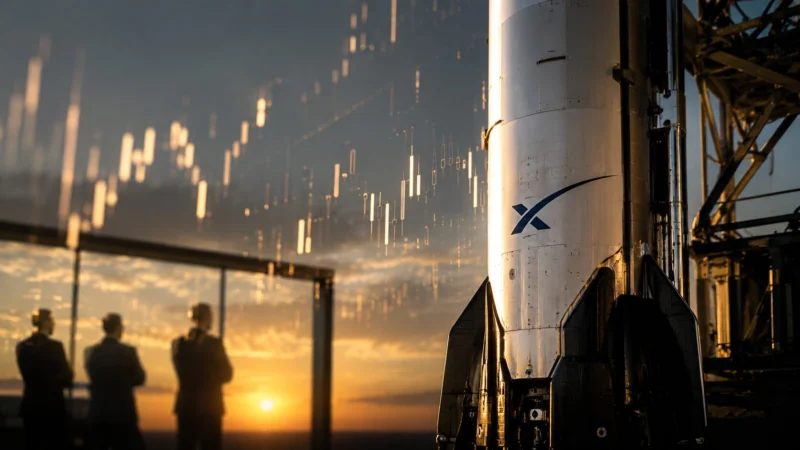
The June 3 S-1/A amendment reveals that SpaceX's upcoming public listing is heavily driven by its role as an AI compute middleman, leveraging xAI's infrastructure to secure a $920 million monthly lease from Google. This confirms the bizarre cross-company compute alliances highlighted in previous weeks, proving that hardware constraints are overriding traditional competitive boundaries.
What to watch: Whether Google exercises its right to cancel the SpaceX agreement if SpaceX fails to deliver the promised chips by the September deadline.
The Custom Silicon Talent Battle
As frontier labs prepare for public listings, the competitive bottleneck is shifting from raw GPU acquisition to custom silicon design aimed at maximizing energy efficiency.
"His LinkedIn role description is listed as 'perplexity per picojoule,' referring to the critical metric of optimizing model performance (perplexity) per unit of energy consumed (picojoules)." — The Decoder via Clive Chan Defection
Clive Chan's defection on June 7 from OpenAI to Anthropic underscores the intense battle for hardware expertise. With Anthropic running Claude on Google's TPUs and Amazon's Trainium, bringing in Tesla and OpenAI's custom chip veteran signals a serious push toward designing in-house ASICs to bypass third-party margins.
What to watch: Whether Anthropic officially launches an in-house chip design team to rival OpenAI's Broadcom partnership.
Recursive Self-Improvement Hype vs. Developer Reality
The narrative of autonomous AI self-improvement is colliding directly with practical developer experiences of massive code bloat and overengineered tooling.
"On Hacker News and across technical forums, developers sharply criticized Anthropic's reliance on 'Lines of Code' (LoC) as a productivity metric. Critics argue that LLMs are notorious for generating highly verbose, non-DRY (Don't Repeat Yourself), and buggy code..." — Hacker News via Anthropic RSI Paper and Backlash
While Anthropic's June 4 paper paints a picture of hyper-efficient development where Claude authors 80% of its own codebase, the engineering community sees a crisis of code slop. This tension exposes a deep gap between the high-level corporate narrative of recursive self-improvement and the reality of resource-heavy, verbose AI outputs.
What to watch: Whether developer frustration with verbose AI-generated code slows down the enterprise adoption of automated software systems.
The Regulatory Battle Over Pre-Release Approvals
Frontier labs are aggressively lobbying to replace hard government pre-release approvals with post-development evaluations, hoping to preserve their release velocity ahead of public offerings.
"Altman argued that federal requirements should focus on mandatory risk evaluations (outcomes) rather than licensing/pre-approvals (permissions)." — Cryptobriefing via Altman Capitol Hill Lobbying
Altman's June 3 Capitol Hill pushback represents a calculated effort to prevent federal regulators from holding veto power over new releases. While agreeing to comply with voluntary reviews under the executive order mentioned last week, OpenAI is drawing a hard line against formal licensing structures that could stall commercial momentum.
What to watch: Whether Congress moves forward with mandatory pre-approval bills or adopts OpenAI's proposed outcome-focused risk evaluation framework.
What surprised us
- Apple is paying Google $1 billion a year to run Siri on Gemini: In a shocking outsourcing of its core intelligence, Apple's long-awaited Siri overhaul is powered by a 1.2-trillion-parameter Google system hosted on Google Cloud [TechTimes] Apple Siri Gemini Integration
.
- Anthropic's "Claude Code" is built on React and draws the entire terminal screen 60 times a second: Despite being a command-line interface, the tool consumes over 1GB of RAM and 100% CPU. An Anthropic engineer defended the resource-hogging TUI by comparing it to a "small game engine," which developers on Hacker News called "profoundly stupid" [Hacker News] Anthropic RSI Paper and Backlash
.
- SpaceX's S-1/A reveals a planned $60 billion acquisition of Cursor: In a massive expansion of its software footprint, SpaceX is targeting the popular AI coding assistant in an all-stock deal featuring a staggering $10 billion breakup fee [Bitget Academy] SpaceX S-1/A Filing
.
- SpaceX holds over 18,000 Bitcoin on its balance sheet: The S-1/A filing officially confirmed that the aerospace-turned-compute giant holds 18,712 Bitcoin, valued at up to $1.5 billion [Bitget Academy] SpaceX S-1/A Filing