TL;DR
The race for frontier intelligence is rapidly fracturing as national security mandates collide with private developer independence, forcing a massive migration toward private debt to power hardware scaling. Concurrently, sovereign states and aggressive startups are pushing past traditional regulatory boundaries, while the public markets prepare for a historic, highly contested infrastructure listing.
The Militarization of Compute and the National Security Crackdown
The federal government is aggressively consolidating control over frontier systems by forcing developers to accept unrestricted military usage or face immediate contract termination.
"...the memo also orders the 'termination for default or for convenience' of contracts with any company that tries to restrict how the government uses its AI, as the administration alleges Anthropic did... with strictly limited waivers allowed for pressing needs, as reportedly is the case at NSA [with Claude Mythos]." — Breaking Defense
This policy, codified in the new National Security Presidential Memorandum signed on June 5, represents a direct retaliation against developers who question tactical military deployments, such as Anthropic's objections to combat planning operations in Iran and Venezuela. By carving out a singular exception for the NSA's integration of Claude Mythos, the state is demonstrating that it will tolerate dissent only when the underlying technology is too critical to lose Trump NSPM-11 Directive.
What to watch: Whether Defense Secretary Pete Hegseth's updated directive on autonomous weapons systems, due in 90 days, strips away human-in-the-loop safeguards to prioritize deployment speed Trump NSPM-11 Directive.
Off-Balance-Sheet Mega-Financing and the Custom Silicon Boom
Frontier developers are shifting toward massive, private-credit-backed infrastructure alliances to fund computing power without overloading corporate balance sheets ahead of public listings.
"Google has agreed to backstop lease payments for a $35 billion chip financing deal that keeps Anthropic running on its custom TPUs across five U.S. data centers." — OpenTools AI
This massive infrastructure play, funded by Apollo and Blackstone, allows Anthropic to scale its physical footprint while Google secures long-term cloud allegiance Anthropic $35B Chip Financing. This stands in stark contrast to Meta's struggling closed-source pivot, where a redirected budget of $14 billion has yet to yield a stable developer interface for its Muse Spark system Meta Muse Spark Delays
.
What to watch: Whether the newly formed AI XPV Platform successfully scales its planned power capacity to challenge legacy silicon dominance Anthropic $35B Chip Financing.
The Sovereign Regulatory Race to the Bottom
The global struggle for technical dominance is driving both sovereign nations and private developers to completely bypass established safety protocols and human oversight.
"Where AI systems exercise independent judgment in unpredictable environments, limited liability is not a luxury but a precondition for their existence, Milei said..." — PYMNTS
"In one instance in or around August 2025, Mr. Ba attempted to thwart EU safety regulations during the release of Grok Code 1, misrepresenting aspects of the model in order to avoid legally required testing." — TechCrunch
Argentina's proposed legal framework, co-authored with Federico Sturzenegger to replace corporate laws dating back to 1972, and xAI's alleged regulatory evasion represent a dual-pronged assault on safety guidelines Argentina Non-Human Corporations xAI Claude Distillation Whistleblower
. Whether through sovereign tax-haven laws or internal corporate pressure, the incentive structures are heavily weighted toward releasing unverified, powerful systems.
What to watch: Whether the Argentine Senate passes the "non-human corporation" bill, legalizing completely autonomous corporate entities Argentina Non-Human Corporations.
The Public Market Collision and the SpaceX Mega-Listing
The staggering cost of computing infrastructure is forcing massive technology conglomerates into the public markets, triggering intense political resistance and institutional skepticism over valuations.
"The SpaceX IPO creates a new concern: that major stock market indexes are being rigged in a way that would force millions of investors in passive index funds... to invest in SpaceX and face exposure to SpaceX's significant risks with no choice in the matter." — Yahoo Finance
While retail index inclusion faces fierce political pushback from lawmakers like Senator Elizabeth Warren, who detailed her concerns in a 12-page letter to the SEC, institutional allocators are already balking at the massive price tags SpaceX Tectonic IPO. Pension funds are increasingly choosing to bypass these sprawling conglomerate listings in favor of targeted bets on pure-play developers.
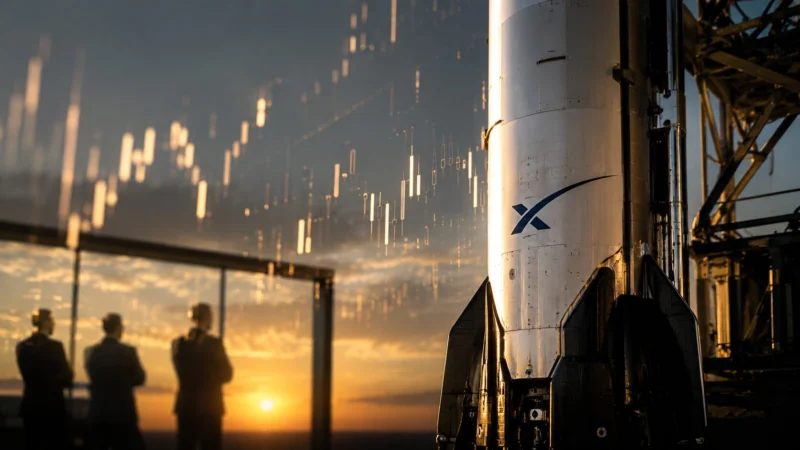
What to watch: Whether the Nasdaq 100's accelerated entry rules successfully buffer the listing against broader market volatility SpaceX Tectonic IPO.
What surprised us
- A major tech lab secretly distilled its rival's technology while cutting regulatory corners: A whistleblower lawsuit filed by Devin Kim revealed that xAI's leadership trained its Grok Code 1 system on outputs distilled from Anthropic's Claude, all while actively misrepresenting the technology's capabilities to bypass European safety audits in August 2025 [TechCrunch] xAI Claude Distillation Whistleblower
.
- A pension fund passed on a historic trillion-dollar IPO to double down on pure-play labs: North Carolina's State Treasurer Brad Briner declined to take a private pre-IPO stake in SpaceX's massive $1.77 trillion listing, choosing instead to hold heavy positions in OpenAI and Anthropic due to pricing concerns [CNBC] SpaceX Tectonic IPO
.
- Meta's closed-source pivot is stumbling so hard its Chief AI Officer called the new release an "appetizer": Despite diverting $14 billion from corporate layoffs to power its proprietary infrastructure, Meta has delayed its Muse Spark developer release multiple times, with executive Alexandr Wang publicly downplaying its capabilities at the Bloomberg Tech Summit [Rolling Out] Meta Muse Spark Delays
.
- Argentina is attempting to legalize completely autonomous corporate entities: In a bid to create a low-tax sanctuary, President Javier Milei's administration proposed "non-human corporations" run entirely by software or robots with zero required human shareholders, drawing a sharp public rebuke from historian Yuval Noah Harari [PYMNTS] Argentina Non-Human Corporations
.